Renting out a house as a holiday home? These are the rules!
The Netherlands is popular for tourists. In some periods it is hardly possible to book a hotel room in the big cities and it is also getting busier in the smaller towns and villages. Tourists, therefore more often, move to private homes where they can stay during their holiday. Golden times for homeowners. But watch out. Do you want to rent out your house as a holiday home? Then you have to adhere to a number of rules. You can read which ones they are here.
Renting out a house as a holiday home, is that allowed?
‘Can I rent out my house as a holiday home?’ One of the most common questions we get at Stoit. Not surprising: whether you live by the sea, in the big city or in a picturesque village, renting out your home to tourists can be very lucrative. Renting out a (second) home as a holiday home is permitted in the Netherlands, but there are – in addition to rules – a number of points for attention. For example, is there a mortgage on the house you want to rent out? Then you must always ask permission from the mortgage lender.
Is your owner-occupied house an apartment? Some owners’ association have prohibited holiday rentals in the regulations. It is also possible that the VVE requires notification of rental and/or asks the tenant to sign the house rules. For an apartment, in addition to the mortgage lender, you must also inquire with the Owners’ Association.
Holiday rental legislation
According to the national government, everyone in the Netherlands should be able to rent out his or her house to tourists, provided that the rental does not cause nuisance and is not at the expense of house seekers. The rules for renting out a holiday home are set out in the New Touristic Rental of Residential Space Act, among other things. With this law, the Housing Act 2014 has been amended for the regulation of holiday rentals. However, it is up to the municipalities whether they use the new law. Since 2022, some major municipalities have been regulating short-term rentals.
Do you need a permit for a holiday home?
The rules for holiday rentals therefore differ per municipality. A holiday home, like a hotel room and a short stay apartment, is intended for temporary stay where the tenant does not register at the address with the municipality. A house or apartment intended for living space and intended for permanent residence can also be rented out temporarily. In principle, anyone can rent out their owner-occupied home. Do you want to rent out your house as a holiday home and are you wondering whether you need a permit? Then check with the municipality in which you live what the rules are. In many cases you only need to register the house, but there are municipalities that require a permit.
In addition to rules regarding permits, municipalities apply different rules for the maximum number of nights, the rental periods and the tourist tax.
Rental vacation rental tax
When renting out your (holiday) home, also take the tax rules into account. Rental income can have consequences for the tax return. The Tax and Customs Administration distinguishes between the rental of the owner-occupied home in which you live and the rental of a second (holiday) home.
Renting out a holiday home in box 1 or 3?
Do you occasionally rent out your own home to tourists? In that case, you must declare 70% of your rental income in box 1. Do you provide additional services, such as meals or cleaning, or do you rent out the holiday home through a tourist office? Then the income is fully taxed. It is then regarded as income from work.
When renting out a holiday home or second home, you do not have to state the rental income. For small entrepreneurs who want to rent out a second home, there is the Small Entrepreneurs Scheme (KOR). If you qualify for this, you do not have to pay VAT on the rental. You also cannot reclaim VAT for the costs you incur for the holiday accommodation. It depends on several factors whether the Small Entrepreneurs Scheme is interesting for you. So inform yourself well in advance.
Tourist tax
You must pay tourist tax on the income from holiday rentals. You must pay the tourist tax to the municipality. You share the number of overnight stays from your administration with the municipality. The amount of the tax differs per municipality. Because B&B rental and short stay rental is more laborious than long-term rental, it can be seen by the tax authorities as income from work. In that case, you pay tax on the rental income. You can prevent this by completely outsourcing the mediation and management.
How many weeks per year can you rent out your house?
In some cases, you also have to pay VAT in addition to income tax. This is the case if the rental of your holiday home lasts longer than 140 days per year in total. That amounts to 20 weeks per year. The Tax and Customs Administration then considers you an entrepreneur, which means that you have to pay 6% VAT on the rental income.
Renting out your own house as a holiday home? Also pay attention to this
Are you going to rent out your own house as a holiday home? Then, in addition to local laws and regulations and tax rules, also pay attention to the following:
- Contents insurance conditions: are your belongings also insured if you rent out your house temporarily or do you have to pay an extra premium?
- Safety: is your home safe enough, in accordance with the 2012 Building Decree? Think of the presence of smoke detectors, fire extinguishers and an escape plan. The municipality can check a holiday home on these points.
- Maximum number of tenants: you may not rent the house to more than four people at the same time.
- Make clear agreements: As the main occupant of the house, you are responsible for the behavior of your guests. Therefore, make clear agreements in advance to prevent nuisance. For example, about putting waste outside. Also inform the neighbors in advance and leave a telephone number so that you or someone else can intervene on your behalf.
What is the return on a holiday home?
With an average occupancy of 65% per year, you as an owner have about a return of 5%. Investing in a holiday home is a good way to build up extra wealth. You can make money by renting out the house and possibly selling the house with added value. It is important to keep an eye on the risks, for example high maintenance costs or a deteriorating housing market.
Outsource the rental of your holiday home? Stoit helps
Do you want to rent out your own house to tourists, but you don’t have the time to arrange everything yourself? Or are you afraid that you will forget to arrange something? You can outsource the rental of your (holiday) home to Stoit. As a rental agent, we have all the knowledge and experience to rent out your house carefree. Especially if you want to rent out your house often, it is wise to work with a real estate agency. Want to know what the possibilities are? Feel free to contact us.
Would you rather rent out your house to expats? We can help you with that too.
Note: Laws and regulations regarding the rental of living space and holiday homes are subject to change and can differ greatly per municipality. Do your own research and educate yourself. The above article has been written with the information available at that time and no rights can be derived from this.
Buying a house to rent out
Inflation is sky-high, while interest rates are lower. Personal assets are worth less and less, so people are looking for alternatives. That’s why buying a house to rent out has been a trend for years. It’s a smart move, as the rent you receive is not taxed, and you profit from the increasing value of the house.
Is owning rental houses to rent out always a smart investment? It is not that simple, as there is a lot to it. This is what you need to know.
Are you allowed to rent out your house?
You might be wondering: can I rent out my house in the Netherlands? Yes, you can. Buying and renting out a house is no problem if you comply with specific terms and conditions. If you already own a home and are looking for a profitable investment, you will come across specific rules. The terms and conditions for buying a second house differ from buying your first. If you buy a house to rent out, you are not allowed the same type of mortgage: in that case, you need a rental property mortgage.
Rental property mortgage
The rental property mortgage is intended for people who want to buy property to rent out. You can’t permanently rent out your own house, but in the case of a rental property mortgage, you can. The rental property mortgage makes it possible to buy a second house as an investment, but it does come with a price tag. Mortgage providers run more risk in the case of a rental property mortgage. That is why most providers charge you an interest rate surcharge.
What is the maximum amount banks will lend?
You will need a second mortgage if for buying rental property. It is wise to learn more about the financial terms and conditions if you want to do so. With a rental property mortgage, you can typically finance 70 to 90% of your rental property purchase. In comparison, a ‘regular’ mortgage would account for 100% of the costs. This has one advantage: the percentage is calculated based on the market value when renting the house out. This value is lower than when you inhabit the house yourself. Calculating this value happens through a valuation of the property.
If you buy a house, can you rent it out?
Besides financial, there are also construction and judicial terms and conditions. A rental property mortgage is typically only approved once you comply with certain construction conditions. Additionally, the property usually has to be located in the Netherlands. There are rules for use as well. Short stay is ruled out in every case, and renting out as student housing or holiday home is rarely allowed. Local government adds rules as well. To make sure there is enough affordable housing, an increasing number of municipalities impose a self-housing obligation. In that case, owning rental houses to rent out is not an option.
Buying rental property: taxation
The tax authorities see buying your first house as a box 1 property, which means you are entitled to a mortgage interest deduction. A rental property purchase is seen as a box 3 asset. This means you can’t make use of mortgage interest deductions.
The homeownership benefit does not apply either. Interestingly, you don’t pay any taxes for your profits out of rent. If you buy a house to rent out, you pay a transfer tax once.
Lastly, you will receive yearly billing like the property tax (OZB) and municipal taxes. You obviously need to consider all financial consequences when making a return calculation, to conclude whether a rental property investment is a good idea.
Buying a house to rent out: maintenance
Buying a house to rent out is not a passive investment. As the owner, you are responsible for the house’s condition by conducting small and extensive maintenance. We advise you to act immediately when problems arise, which helps prevent high costs in the future. You are also the person for tenants to contact, which requires attention. Be aware of your role and invest in the relationship with your tenants. This is a solid basis for a rental property investment in a second house.
Buying rental property: is it profitable?
Many people have been searching for ‘Buying a house to sell 2022’. But is a second house actually a smart move? Unfortunately, there is no straightforward answer. The housing market faces a shortage, which will not be resolved quickly. A rental property investment can be profitable, but all the numbers need to add up. In other words: the right house in the right place, with a fitting renting property mortgage. It is also important to be aware of fiscal and local rules and your responsibilities as a landlord. Do you tick all those boxes? Then a rental property purchase is definitely a good idea!
Buying a house to rent out: what’s next?
Did you decide to buy a second house? Do you want to know more about the rental property mortgage and other factors that weigh in? Buying a house to rent out is complex, so make sure you reach out to a specialist to give you advice. At Stoit Group we are happy to help. Please contact us for an introductory meeting.
What should be in a rental agreement
A rental agreement of a house and apartment is drawn up to properly record the agreements between the tenant and the landlord about what you can expect from each other. It records topics that you do not immediately think of when making an oral appointment. The rental agreement is also there to be able to fall back on if the tenant or landlord at a certain moment don’t remember or is not keeping to the original made agreements.
The rental agreement is drawn up within the framework of the tenancy law as laid down in the Civil Code. The following are always included in the rental agreement:
- Who the landlord is;
- Who the tenant is;
- Who inhabits the house;
- The details of the house;
- The rental price;
- The date on which the rent increase takes place for the first time;
- How much the rent can be increased annually;
- The amount of the deposit;
- The contract form;
- Further general matters;
- The signature of the tenant and the landlord.
In the rental agreement, the landlord (s) is described with the full name (s), date of birth (s) and place (s) of birth.
The tenant’s full name (s), place and date of birth are also mentioned.
It describes who lives in the house. The rental agreement is in the name of the tenant. The other residents are also appointed in the contract.
The agreed rental price is also included in the rental agreement. This is usually broken down into base rent, a part for upholstery or furniture and, if applicable, service costs and possibly a parking space. The rent is indexed in July every year as standard. The date of the first rent increase is stated in the rental agreement.
The amount of the deposit and under which conditions the tenant will receive the deposit back is described.
The details of the rented house are also included in the rental agreement: is it an apartment, a single-family house or a detached house? How many bedrooms does the apartment have and does the house have a garden? Is it an unfurnished or fully furnished house, does the house have a garage or a parking space and/or storage room? The address of the house is also included in the rental agreement.
When the tenant has to pay the rent is also described in the rental agreement.
In most cases of upholstered rental, the subscriptions for gas, water, electricity and television and the internet are in the name of the tenant. If a house is rented fully furnished, gas, water, electricity and television and the internet are often in the name of the landlord or manager. In this case, the (advanced) amount is included in the rental agreement.
Another provision in the rental agreement is about taxes and other charges that are for the account of the tenant or landlord, as well as which insurance policies must be taken out by tenant and/or landlord.
The starting date of the rental period is stated in the rental agreement. The rental period differs per situation. Below, various types of rental are briefly explained, concerning the rental period and the notice period stated in the rental agreement.
The contract types
There are different versions of the rental agreement. Drafted and applied specifically for each situation. What type of contract does the agreement involve? That is also stated in the rental agreement. The most common types of contracts are briefly explained below.
Undetermined period
This is the most common and best-known form of rental in the Netherlands. In the case of rental for an undetermined period, the rental agreement states, in addition to the commencement date, the minimum rental period. During this period, the tenant cannot cancel the rent. After this minimum rental period, the tenant has one calendar month notice period.
Temporary rental for a maximum of two years
If a home is rented out on the basis of a temporary rental for a maximum of two years, the maximum end date is stated in the rental agreement next to the commencement date. With this type of rental agreement, it is also possible to opt for a shorter maximum rental period than 2 years. There is no minimum rental period for the tenant. The notice period for the tenant is one calendar month.
As a landlord, you must send a notice to the tenant at least 1 month and a maximum of 3 months before the expiry of the rental to inform them that the end date is approaching. It is not possible by law to conclude a temporary rental agreement again with the same tenant, but only a rental agreement for an indefinite period.
Temporary rental, intermediate rental, diplomatic clause lessor
If the house is temporarily and therefore not indefinitely available for rent due to, for example, the landlord’s stay abroad, a rental agreement will be drawn up in the category ‘intermediate rental’. In this case, the end date is stated in the rental agreement, plus the minimum rental period for the tenant. The landlord can cancel the rental agreement with a notice period of no less than three calendar months and a maximum of six calendar months.
Exceptional provisions
Special provisions are often included at the end of the rental agreement. This discusses topics that have not yet been laid down in a model for the rental agreement and the General Provisions, or that deviate from the standard documentation of the General Provisions. For example, that it is a non-smoking home or that pets are not allowed.
The General Provisions
If you would like to record everything in the rental agreement itself, the rental agreement will be a very long and extensive document. That is why all regular matters surrounding the rental of housing are described in the General Provisions. This includes maintenance of the garden, minor maintenance of the house for the tenant, termination of Rental, payments, destination and access to the house.
The most commonly used model of the General Provisions in the Netherlands has been laid down by the ROZ.
Want to know more?
Do you have any further questions after reading this article about the rental agreement or do you want to know what the options for renting out your home are? Please contact us without any obligation. We are happy to help you!
In five steps to a carefree rental
Are you considering renting out your property or purchasing a property for rental as an investment?
Then it is important to be well prepared. The rental legislation is extensive and complicated. It is important to be aware of the possibilities, but also certainly the limitations, rights and obligations, as a landlord.
At Stoit Groep we believe it is important to inform a landlord fully and clearly and to relieve them in every possible way. That is why we have laid out the rental process on the basis of five steps.

1. Contact us
Do you intend to rent out your property? Or do you intend to purchase a property for rental? We advise you about the possibilities.
In the first telephone conversation we inform you about the possibilities and what you should take into account when renting. Subsequently, an appointment can be planned with you at the property, at your home or at our office.
2. Personal appointment
It starts with an admission interview that preferably takes place at the rental property. We then get acquainted and immediately get a good impression of the home. We believe that the better we inform you in advance, the smoother the rental will be afterwards. That is why we take the time and tell you the whole story. A small selection of the topics that will be discussed:
- What is the market like and what is a realistic rental price for your home;
- What kind of tenants will respond to your home;
- Which locations and types of homes are interesting to purchase for renting out (if you still want to buy a home);
- What types of contract are possible;
- What is the structure of the rental legislation;
- What type of tenants do we work with and how do we screen them.
- Who are we? What can Stoit Groep do for you?
We will respond extensively to your rental questions.
3. Your property online
We publish your property with photos and a compelling description on the Stoit Groep website and on a generous number of other relevant websites with rental offers, some of which are specifically aimed at the expat market.
In addition, we offer your property through rental agents, relocation agencies and international companies. We have and maintain daily contact with these parties. This way we ensure that, in addition to the online searchers, your home is actively brought to the attention of our relations.
4. Viewings
If an interested candidate wants to view your home, we work quickly. Based on information obtained from the candidate, we determine whether it is relevant for them to view it and whether the interested candidate could be a good tenant for your home. We plan a viewing as soon as possible. It is important that we have the key to your house in our presence, so we can go straight into the house when needed . The faster we work, the greater the chance of a quick rental.
During the viewing we inform the interested candidate about the details of the property. After the candidate decides to rent the property, we request the necessary documents and contact you to inform you about the background of the candidate tenants. After receiving the documents and your agreement, the rental agreement is drawn up and signed.
5. Your property rented out
Hoorah! A tenant has been found.
Stoit Groep collects the documents and presents the candidate to you. An extensive screening is also carried out. Is everything in order? Then the lease can be drawn up and signed.
At the start of the rental period we carry out an inspection of the house, a detailed report with photos is prepared, after which the key transfer takes place. From the start of the rental period, the tenant can be quickly assisted 24/7 through our service website for solving questions and / or problems. Our service department is also available for reporting and resolving notices quickly. Both during office hours and in the evening and weekends in case of emergencies. Stoit Groep has its own maintenance team and cleaning team, which makes it possible to move quickly.
Stoit Groep makes every effort to rent out your home as fast as possible, at a nice rental price and to keep the vacancy to a minimum. The interest of the landlord and also a lasting relationship with the tenant is our drive.
Call or e-mail us, we will give you more information about all the possibilities of a successful rental.
You can reach us via telephone number: +31 (0) 402140660 or e-mail: info@stoit.nl.
Renting out a house with a mortgage: is that allowed?
Maybe you will be traveling for a while, or you own several houses.
A shame to leave houses empty, right? Many people, therefore, consider renting out their house. Renting out a house can be very lucrative.
Homeownership usually involves a mortgage. Can you rent out a house if you have a mortgage on it?
We explain what the rules are.
The rules for renting out a home with a mortgage
Renting out a house with a mortgage is the exception rather than the rule. Most mortgage contracts state that the house is intended for private occupation. If something changes in this (such as with rental) you must inform the mortgage lender about this.
The so-called investment mortgages and rental mortgages have already given the homeowner permission to let.
Reasons why more and more lenders do not grant permission
There are several reasons why lenders do not allow rental, namely:
- Tenants are well protected in the Netherlands and cannot simply be evicted. Suppose you can no longer pay your mortgage, the lender is in a difficult situation that they have to get a tenant out. They prefer to avoid this risk.
- Rental often leads to a decrease in the value of your home. You’ve probably heard of tenants who are slack in maintaining their home, or students who make a mess of it. When it comes to a forced sale, the bank sees the risk that a home yields less than before it was rented out.
- The housing shortage for starters. Mortgage lenders and banks have a duty of care and want to prevent many people from having multiple mortgages and “milking out houses”.
However, some people are allowed to rent out their home from the mortgage lender. Often such a home than meets the category ‘intermediate rent’ as described in the tenancy law. Applications of intermediate rental are the “vacancy clause” and the “landlord’s diplomatic clause”.
Good news: the vacancy law offers opportunities
If a home is vacant for a longer period of time, the mortgage lender will grant permission quicker to rent out the home. There are a lot of rules that apply to temporary rental under the vacancy law: that is why we have devoted a separate blog to it.
Note: as soon as you rent out your home, the mortgage interest is no longer deductible.
Are you unable to find a solution, or do you have specific questions about the vacancy law? Stoit will help you without obligation. Get in touch.
You will receive permission more quickly with temporary emigration
Are you going to emigrate temporarily? Even then, banks usually give permission to rent out a home with a “landlord’s diplomatic clause” included in the rental agreement.
Renting out a house remotely is the solution for people who temporarily emigrate. Some advantages are for example:
- Your house does not deteriorate because people are residing in the house.
- You have fewer costs, because you can pay the mortgage and/or other expenses (partly) with the rent.
- It is safer, because having people in your home means there will likely be less opportunity for break-ins or squatters.
- You keep your own home in the Netherlands, so you can simply live in your own home when you return.
Renting out your house yourself from abroad is not that practical. Communicating with tenants from abroad is difficult and there is not much you can do if there are defects in the home.
That is why many landlords engage a company for the management of real estate. A company that has contact with the tenants and takes care of the maintenance of the house.
In collaboration with a rental company you will experience the benefits, but not the burdens of home rental.
Temporary rental in connection with own habitation in the near future
A third form of intermediate rent is for house buyers who will not immediately live there. For example when buying an apartment for when you are older.
The purchased apartment can then be rented out temporarily. When you want to use the apartment yourself, there is an option to cancel the rent due to urgent personal use.
With all three forms of intermediate rental it is very important that this is described very well with an extra clause in the rental agreement. This is in order to demonstrate later that the tenants were well aware of the situation and the intention of the rental.
Buying a house to use for rental
In this blog we have hopefully shown you that it is not so easy to buy a house and use it for rental immediately. As soon as there is a mortgage, fairly strict rules apply.
Do you still want to buy a house and use it for rental? Discuss your plans in advance with your bank so that you are not faced with any surprises. Check out our separate blog about buying and renting a house for more information on this theme. Here we will tell you, for example, what you should pay attention to when buying an investment home, and how you can finance it.
Do you have any questions about renting?
Do you have any questions about renting out a house? Check out our frequently asked questions for landlords. Or contact our customer service.
We are here for you to answer all your questions.
How many houses can you rent out?
Investing in real estate is a significant trend. Everyone sees opportunities in this still ever-growing market.
Banks offer opportunities with financing products to also facilitate the ‘private investor’ when purchasing an investment property. Funded investing in real estate is more within reach.
Spreading is still an important pillar in investing. Investors have different strategies for achieving an optimal return. ‘Return on investment’ and ‘surplus value potential’ are therefore important factors in the purchase of an investment property.
But how many houses you rent out? In this blog we will answer this frequently asked question for you.
Good news: you can rent out thís many properties
The answer on ‘How many properties can you rent out’ is simple: as much as you want.
When we talk about box 3 (real estate) investments however, you have to take the tax consequences into account.
Am I an investor or entrepreneur? That is of course a tax theme. This question is difficult to answer.
In any case, ensure that the appearance of entrepreneurship is avoided. You can choose to hand over mediation and management of the houses, to make sure your earnings belong to box 3 instead of box 1.
The importance of a rental agent
Generally speaking, you can thus rent out an infinite number of properties in box 3, as long as you ensure that you do not perform any activities with regard to houses. This is why you need a rental agent.
Also, owning and enhancing return on investment property provides care and is very labour-intensive. Your rental agent is of great importance because you probably do not want that care, especially if you are not an entrepreneur.
Get in touch with an expert
Be well informed in advance by specialists, especially when it concerns multiple investment properties. Tip: find extra information in our blog: buying a house to rent out.
If you’re looking for a care-free solution for renting out your house, you can always contact us to discuss the possibilities.
Temporary rental under ‘leegstandwet’ (vacancy law)
A home can be temporarily vacant for various reasons. For example, when the owner has moved and the property is for sale and therefore empty. It can also happen that the house is waiting for demolition or renovation. In these cases, it is possible to rent out temporarily with a ‘leegstandwet vergunning’ (vacancy law permit).
The different types of houses / buildings that can be rented out temporarily with a leegstandwet (vacancy law) permit are:
- Living space in a building with specific construction or layout
- Living space in an owneroccupied home for sale
- Living space in a rental home for sale
- Living space in a rental home that is being demolished or renovated
Different rules apply for each of the situations listed above. We often get the question from our customers whether they can temporarily rent out their home that is for sale. That is why below we further explain the situation of the living space in an owner-occupied home for sale.
Living space in an owner-occupied home for sale
This form is most common for a private owner. That is why we explain this form. For example, it may happen that a homeowner himself has moved and has not yet sold his previous home. A few years ago, when the economy was in less favourable shape than it is today, this form of rental was used regularly. Now that homes are being sold faster, this is exceptional. There nevertheless may be good reasons to rent out a home that is for sale.
The property must meet one of the following conditions:
- It concerns new construction;
- The property has been rented out for a maximum of 3 years in the last 10 years;
- In the year before the home became vacant, the home was occupied by the owner;
Conditions for rental:
- The landlord has a permit from the municipality for temporary rental based on the leegstandwet (vacancy law);
- A written lease agreement;
Details in the rental agreement concern:
- The lease must state that it concerns a lease under the leegstandwet (vacancy law) and for which period the permit has been granted;
- The maximum rental price stated in the permit must be included in the rental agreement (if the permit was issued before 1 July 2013).
- The contract duration is at least 6 calendar months
- The municipality grants the permit for a maximum of 5 years;
- The lease ends automatically when the permit ends;
- The rent can be terminated prematurely with a notice period of 1 calendar month for the tenant and 3 calendar months for the lessor.
If, after the expiry of the leegstandwet vergunning (vacancy law permit), the landlord wishes to rent out for the second time under a leegstandwet vergunning (vacancy law permit), there must be 5 years between two permits.
A private owner receives a permit for a maximum of 2 owner-occupied properties that are for sale at the same time.
How do you apply for a ‘leegstandwet vergunning’ (vacancy law permit)?
If the house becomes vacant and meets the above-mentioned requirements, then in many cases you can rent it out with a leegstandwet vergunning (vacancy law permit). You can apply for this permit in the municipality where the property is located. It may be that the mortgage lender also sets requirements.
You can apply by using the “Request a permit” form for temporary rental of vacant living space. If the permit needs to be renewed, this can be requested using the “Request renewal permit” form.
These matters are assessed by the municipality:
- Vacancy of the living space
- The possibility of the owner renting or selling in a way other than the leegstandwet (vacancy law) is being considered.
- The house must be sufficiently inhabited during the rental period.
- If the house is being demolished or renovated, the owner has a duty to demonstrate that the renovation will be drastic and that it will take place within a reasonable period of time.
- A private owner may have a maximum of 2 permits at the same time for renting an owneroccupied home that is for sale.
Municipalities are not permitted to set their own additional requirements that are not included in leegstandwet (vacancy law).
Mortgage lender’s permission for temporary letting
To temporarily rent out your owner-occupied home, you need permission from the mortgage provider. They can set requirements.
Temporary rental and mortgage interest deduction
When you rent out your owner-occupied home, it no longer falls under box 1 (income from work and owner-occupied home) but in box 3 (income from savings and investments). From that time, you can no longer claim a mortgage interest deduction.
Interested in renting out your house?
If you’re looking for a care-free solution for renting out your house, you can always contact us to discuss the possibilities.
Sources
We write articles to inform both our tenants and landlords as fully as possible. With this article, Stoit Groep hopes to provide clarification about rental with a leegstandwet vergunning. The data in this article is based on information from the central government. The information was taken from the central government on 16 September 2019.
Sources for more information:
- www.rijksoverheid.nl
- https://wetten.overheid.nl/BWBR0003403/201806-13
- https://www.rijksoverheid.nl/documenten/formulieren/2013/07/04/aanvraag-vergunning-tot-tijdelijke-verhuur-van-leegstaande-woonruimte
Long-distance landlords – What’s their experience?
Daan and Julia are landlords who moved to Singapore two years ago because of Julia’s promotion at work. Living at a great distance made it difficult to rent, manage, negotiate with potential tenants, take care of maintenance and solve unforeseen problems.
Every year they travelled to the Netherlands and spent three days resolving problems at their home, thereby wasting valuable vacation time.
Despite the challenges involved with remote property management, the couple did not want to miss the opportunity to rent out their home in the Netherlands.
The main goal of Daan and Julia was to find a full rental and management service that they could trust. They wanted the assurance that any problems that arise during the rental period would be dealt with quickly and efficiently and are professionally resolved.
The solution
After the first contact with Stoit Groep, Daan and Julia discovered that we can offer them more than just the steady rental income. In addition to a consistent income, we also take care of finding a new tenant, take care of the initial delivery, prepare clear and complete inspection reports, are available 7 days a week for service follow-up and ensure a good final cleaning on departure of the tenant. The property is in safe hands.
Stoit Groep’s “carefree rental” model offered them a carefree, fully managed service that offers peace and income security. They experienced long-term, appropriate service that took away their concerns about their home remotely and across multiple time zones.
The advantages
No income loss due to extra management costs. Stoit Groep has simplified the process of finding a reliable tenant for them with the added advantage that the chance of vacancy has been considerably reduced. According to the calculation, limiting the vacancy rate and renting out at a slightly higher rent yields Daan and Julia’s home a whopping € 2,340 more over their three-year lease. In addition, the management was done entirely by Stoit Groep, so it didn’t cost Daan and Julia any time or work. How great is that?! More income and less work!
Additional advantages
Daan and Julia feel comfortable because their home is well cared for. And as an additional advantage, instead of flying back to the Netherlands during a vacation to do jobs around the house, they can now relax and enjoy their vacation!
New luxury short stay apartments in the center of Eindhoven
When you arrive in Eindhoven as an expat, in many cases it is quite a challenge to find suitable living space. If you do not yet know how long you are going to stay or if you do not know the city well enough to determine in which part you would like to live, then it is a relief to find a temporary solution.
In the middle of the center of Eindhoven 11 high-quality, modern, luxurious apartments and penthouses are realized. These short stay apartments and penthouses offer the opportunity to “land” in a cozy and contemporary atmosphere in this beautiful city.
The completely renovated building is located in the bustling heart of Eindhoven with plenty of facilities, shops, museums, sports facilities, parks, cinemas and entertainment venues in the immediate vicinity. In a few minutes you walk to the central station from where the buses depart. These apartments provide you the possibility to reside in the middle of everything, yet the apartments offer the peace and luxury where you immediately experience the feeling of coming home.
Volderhof: 11 luxury short stay apartments with a surface of 50 m2 to 80 m2 for prices from € 1150 excluded 9% VAT up to and including € 1600 excluded 9% VAT.
Due to the great interest and for more information, we request you to contact one of the Stoit Groep Real Estate Agents by telephone.
View the available apartments here
Buying and renting out a house. Is it lucrative?
Savings interest has reached a historically low point and your money does not yield anything if you just leave it in the bank. In fact, when you compare interest rates with inflation, your money is becoming less and less valuable.
Doing nothing with your money, costs you money. That is why many people with money look for other options.
Investing in Bitcoins or other Cryptocurrency? It has turned out that these investments are very unstable.
Investing in shares or bonds is of course also an option. Why investing in real estate can be very lucrative, I will explain further below.
The knife cuts on three sides
When you buy a house to rent out, which is partly financed, the knife cuts three ways.
- The tenant pays for your financing
- You benefit from the value development of your house
- You create a return on investment.
The tenant pays the financing
When you purchase a property and partly finance it, you do not make much return on the financed part, but the tenant pays the interest and the repayment. You can consider it a piggy bank that you let the tenant fill up.
In the meantime, you benefit from the value development of the home.
Benefit from value development of your home
House prices rise fast. Issued forecasts include the NVM and the banks indicate that the growth continues in the coming years because there is a shortage of housing.
Several governments encourage the construction of new homes and offer opportunities to convert vacant stores into apartments. Investors, project developers and construction companies work hard to create new homes, but this is not nearly enough to meet the expected demand.
The average value of residential development in the Netherlands was no less than 6.5% in 2018.
You make a return on investment.
You make a return on the part that you invest in the home yourself. These returns can go up to 10% depending on the finish, size, facilities and location of the property.
Add the value development to this return and compare it again to whatever investment you would have taken in the bank.
Now you know why investing in real estate can be lucrative.
But … the purchase prices of homes have become so high
The property prices have indeed risen sharply. Nevertheless, it is expected that housing prices will continue to rise. There are big plans for new construction in the years to come, but it will not solve housing shortage over the next decade. As a result, prices will continue to rise in the coming years.
As supply and demand become more and more balanced, prices will stabilize but a drop in house prices is not yet in sight.
What if the house prices fall?
Fewer houses were sold during the crisis, causing the prices of the houses to drop. But if you look at the value development of homes over the past 20 to 50 years, it appears that the rise has continued, and the crisis was just a dip.
When the property is rented out, and the equity and debt capital in balance, the risk remains within limits.
How do I finance an investment property?
Not all banks finance investment properties, but there are definitely possibilities. Your bank can advise on this.
In 2019 we see that banks provide 70% financing at the liquidation value of the house value in rented state. Which means that you pay at least 50% of the purchase with your own resources.
Discuss the options with your financial adviser
What should I look out for when buying an investment property?
There is no manual that describes what a good investment property must meet. This depends on various factors. Think of the following.
- Location
- Size of the home
- Finishing level
- Distance to (international) schools, shops, companies, train stations and the city center
- Facilities that the home (or apartment complex) offers
- Parking space
A small home often has a higher rent per square meter than a larger home. And because the rental price of the property is lower than that of a larger property, the target group is larger, which means that the property is likely to be rented out faster and the chance of vacancy is much smaller. In this way you achieve a good return.
When purchasing a house, pay attention to how much you pay per square meter of living space.
More information about renting out your property?
We have carefully compiled this informative blog to advise you on what to look for if you are considering investing in an investment property. Or if you still have doubts, what to do with your money. However, this blog is not an advice on how to invest.
If you would like to receive more information about investing in an investment property, then we are happy to help. Please contact us.
How to prevent home burglary?
When a house is broken into, you may feel violated. In addition to suffering property damage and losing irreplaceable items, there is often also serious damage due to the burglary and destruction to the property. Apart from that, residents are left behind with the overwhelming feeling of being invaded in their own home.
Burglary can never be completely prevented. But what can you do to prevent a break-in? How do you make it difficult for someone who wants to break into your property? And how well is your house secured?
There are a number of things that a landlord can do to reduce the risk of someone breaking into the house. A tenant can also easily take measures to prevent a break-in.
What the landlord can do
Secure doors and windows
There are many different ways to secure doors against intruders. For example security locks, a security strip, a side lock and a doorkeeper. For windows thieves claws, cockspur window handle, side locks and barrier bars and grilles are good options. Are you looking for a company that can properly advise on hinges and locks and can also install it? Go to the website Politiekeurmerk Veilig Wonen.
Also check whether the skylights are fitted with approved hinges and locks.
Install a home security alarm system
With a security system (wireless if required), an alarm goes off when intruders are detected. This can be a siren on location and the monitored alarm system is also connected to an Alarm Receiving Centre. When an alarm is triggered or the Alarm Receiving Centre detects movements in the house they will contact the resident.
If you choose for an alarm system with a direct link to an Alarm Receiving Centre, then preferably choose a Borg-certified Alarm Receiving Centre. In the event of an intruder alarm activation a signal is sent to the ARC and they will inform the police. In addition, a security system can discount your home insurance.
Secure the second floor
Extra protection of windows and doors is often applied on the ground floor. But in many cases burglars enter your home through a fence, extension or simply a ladder. Therefore always close your upstairs windows when you leave.
Provide lighting
Burglars like to act in the dark. Security light outside the house is the best option for keeping your front door safe from vicious people. It makes your home much less attractive because the risk of being seen is much greater.
What the tenant can do
Keep all doors and windows closed and locked!
It’s a no brainer, but close windows and doors. An open exterior window or door, even if it is only slightly open, is an invitation for burglars to easily enter your home. An open window on the first floor is no less tempting for a burglar. By climbing on a fence, extension or garbage container, the burglar is inside in the blink of an eye.
Do not leave a key on the inside of doors and windows.
When the key is on the inside, the burglar can easily enter the property by smashing a window or by drilling holes in the door pillars.
Give the property a ‘lived-in’ look when you are not there.
Leave lights on when you leave. Turning on the TV can also suggest that someone is present.
Never leave anything of value in plain view
Valuables that are in sight can be a trigger to break into. Think of equipment such as a tablet, mobile phone and jewelry. Put away these items so that potential burglars don’t notice these are present in the home. Make sure you do not have large amounts of cash at home.
Register and mark your possessions.
In the unlikely event that you are burgled, it will help when your valuables are registered or marked. If the loot is found elsewhere, you can easily recognize your possessions and the police can deliver the goods to your home again.
Join forces with neighborhood prevention.
With neighborhood prevention, residents and the police are joining forces to fight crime. That means keeping eyes and ears open in your own interest and that of your immediate environment. Particularities, problems and suspicious situations are signaled and passed on to the correct authority.
Do you want to know more about neighborhood prevention? Contact the police in your area or visit the website WhatsApp Buurtpreventie
Don’t advertise your vacation on social media.
When you are on vacation, burglars have plenty of time to empty your home. Make sure that when you are on vacation this is visible as little as possible. So don’t post it on social media either. Also install lighting with a timer in the house so that light is switched on in different places in the home.
Don’t label your personal keys
If you lose the key ring or if keys get stolen, you make it very easy for a burglar.
Do not hide keys outside.
It is not safe to hide the keys under the doormat or in a flower pot.
Feel free to contact us
With this blog we hope to have given you plenty of useful tips for securing your house against intruders. If you want to rent or rent out a property, our team is ready to answer all your questions and facilitate you during your rental process the best way we can. Feel free to contact us by phone on +31 088 5555040 or by email at info@stoit.nl.
Rental prices Eindhoven are rising rapidly
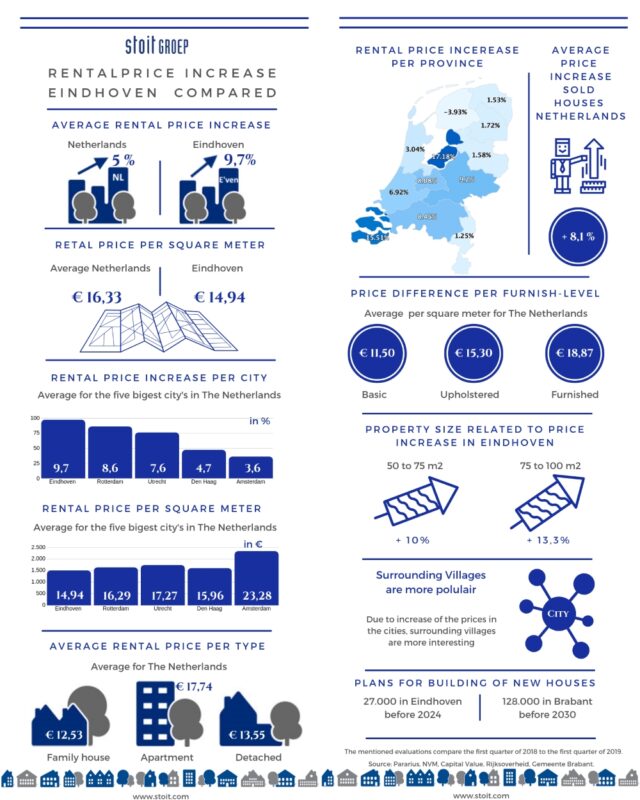
Rental prices in the Netherlands are increasing. Prices are rising rapidly, in Eindhoven in particular. In the past year, the rent has increased by no less than 9.7% in the ‘City of Light’. That is much more than in other large cities such as Amsterdam and The Hague.
For this research into the rental market in the Netherlands, the average rental prices of the first quarter of 2018 were compared with the rental prices of Q1 2019.
Eindhoven rental prices increase with 9.7%
According to an estimate by the CBS, the Dutch population grew by 104 thousand in 2018. Partly due to the increasing number of households, there is a shortage on the rental property market. Landlords can charge higher prices, which is reflected in the figures. Although the national average rent has increased by 4.9%, the rent in Eindhoven has increased by no less than 9.7%. Eindhoven sticks out when it comes to the national rent increase.
With an 8.6% increase, Rotterdam is a close second to Eindhoven. In addition, the rent in Utrecht increased by 7.6% in the past year and by 4.7% in The Hague. Rents in Amsterdam increased by only 3.6%.
Rental price Eindhoven comes close to the Randstad
The higher rents is caused by the increasing demand for rental properties. Because the demand has risen faster than the supply of houses, a scarcity has arisen in the rental market, to which landlords anticipate to.
Yet Eindhoven is still one of the cheapest cities when it comes to rent per square meter. With a square meter price of € 14.94, the Brabant city is below the Dutch average of € 16.33. Despite the rising rents, renting in Eindhoven is still cheaper than renting in the suburbs.
Amsterdam is still the most expensive: with € 23.28 per square meter, our capital is far above the average national rent. In comparison with Eindhoven, the square meter price in Amsterdam is even € 8.34 higher. Utrecht comes in second with a rent of € 17.27 per square meter. Followed by Rotterdam with € 16.29 and The Hague with € 15.96 per square meter.
The cause of the higher rents
De huurprijsstijging wordt veroorzaakt door de toenemende vraag naar huurwoningen. Doordat de vraag harder is gestegen dan het aanbod is er een schaarste ontstaan op de huurmarkt, waar verhuurders slim op inspelen.
Arnoud Snoeijer, General Manager at Stoit Groep in Eindhoven, notices that the increasing number of home seekers are no longer Dutch only but also expats. The number of expats is increasing rapdily, especially in Eindhoven and surrounding areas. They move to the ‘city of technology’ for work or education at the Technical University.
This group of tenants is looking for a property to excess on short notice and is therefore more willing to pay a little extra for a house.
Expats mostly are looking for ready-made furnished rental houses. The average rent for furnished homes is currently € 18.87. An upholstered home has an average rent of € 15.30 per square meter. You can also rent an empty house. The tenant then pays an average square meter price of € 11.50.
Surrounding areas of cities become increasingly popular
Due to the high rents in the big cities, the surrounding villages are becoming increasingly interesting. Tenants move out of the city in search of less expensive options. If tenants can have a larger house, more luxury and other facilities for the same price, then suddenly extra travel time is no longer a problem. The increasing demand for homes in surrounding municipalities is also causing an increase of rents here.
This is also noticeable in the realty. Snoeijer indicates that especially surrounding villages near Eindhoven such as Veldhoven, Nuenen, Waalre and Son are becoming increasingly popular for tenants. But also a city like Helmond, and in particular the Brandevoort district, is a place where tenants really would love to settle.
Future of the housing market
The scarcity on the housing market is at the top of the political agenda. This is apparent from agreements made by both the State, Eindhoven Area and the province. Before 2024, no less than 27,000 new homes will be built in Eindhoven. In Noord-Brabant the plan is to build 128,000 new homes before 2030.
These are all great plans to solve the high demand for living space, but whether it will be enough for a fast-growing city like Eindhoven that will be the question.
How does it work exactly? The 30% scheme explained.
When an expat comes to the Netherlands for work, he or she may incur additional costs. These costs are called Extraterritorial costs. An employer may give a knowledge worker a free (untaxed) allowance for the costs this employee incurs. This is called the 30% scheme. We will further explain this arrangement below.
What is the 30% scheme?
The 30% scheme means that the employer can pay out a maximum of 30% of the wages (including reimbursement) to the employees free of tax. By using this scheme, it is not necessary for the employee to prove any expenses. The employee can, in consultation with the employer, submit a request to the tax authorities to claim this 30% scheme.
There are a number of conditions to be able to claim the 30% scheme:
- The employee has an employment in the Netherlands
- The employee has been recruited by the employer from another country or sent to the employer from another country.
- The employee has lived outside the Netherlands for more than 16 months in the 2 years before the first working day in the Netherlands. And that was also at a distance of more than 150 km from the Dutch border.
- The employee has specific expertise that cannot be found, if at all, on the Dutch labour market.
- The employee has a valid permit
The income of the employee concerned must be a gross minimum of € 37,296to be able to claim the 30% scheme. If the income is lower than this gross amount, the employer can choose to reimburse any expenses tax-free, but the 30% scheme is no option.
If the employer pays or provides more than the maximum amount, this multiple amount is regarded as a wage for the payroll taxes.
If the actual reasonably incurred costs are higher than 30/70 of the wage, the employer may also choose to reimburse the actual costs untaxed. Then all untaxed costs must be proven.
What is the advantage for a landlord to rent his home to an expat?
The advantage of renting to an expat who can claim the 30% scheme is that this expat, in almost all cases, has more net income than a Dutch citizen who earns the same gross income. This offers the landlord more security.
An expat comes to the Netherlands with the aim to work and also has agreements with his company. As a result, almost all expats have good financial security.
In addition, most expats remain for a limited period of a few years. As a result, the chance that the landlord will have access to the accommodation itself will be higher within a reasonable period of time.
What are Extraterritorial costs?
The extraterritorial costs are the extra costs made by the expat for moving to another country for his work. Below we have described what falls under these costs. Below is a summary of extraterritorial costs.
- Extra costs for living expenses, because the basic needs in the Netherlands can be higher than in the country of origin.
- costs for an orientation trip to the Netherlands
- costs for arranging papers, permits and official documents such as driving licenses, visas and residence permits.
- there may be double housing costs
- Costs incurred for medical examinations and vaccinations for the stay in the Netherlands.
- the (first) housing costs
- If the employee receives housing, only the (first) housing costs that exceed 18% of the wages from current employment are extraterritorial costs. The rest of the costs are wages. When the employee rents by himself, the employer may also apply the 18% calculation method to provide the additional untaxed pay. In general, the employee cannot be reimbursed for the accommodation costs for furniture or provided by the employer.
- double housing costs can also fall under extraterritorial costs.
- storage costs for the household contents that do not move to the Netherlands.
- travel costs to the country of origin for, for example, family visits or family reunification.
- additional costs for having the income tax return completed if this is more expensive than having the declaration completed by a similar tax advisor in the country where you come from. A maximum of € 1,000 applies.
- course costs to learn the Dutch language for you and for the family members who are staying with you
- extra (non-business) telephone calls for calls with the country you come from
- the costs of applying for an exemption from social security, such as an A1 or E101 certificate
Tax free allowances and benefits
If an employee is entitled to the 30% scheme, he may also receive a few untaxed costs from the employer if the employer chooses so. In addition to the 30% scheme, the following costs can be reimbursed or provided free of tax (specific exemption):
- The removal costs and the costs for temporary storage and the transfer of the household contents
- the costs of an introductory visit by the employee to the company in the Netherlands
- the costs of applying for or converting a work permit
- schooling fees for an international school or for an international department of an ordinary school
- This is referred to as:
- the training at the relevant (department of the) school is based on a foreign system
- the school or department is primarily intended for children of foreign workers
How long can an expat claim this 30% scheme?
The 30% scheme can be claimed for a maximum of 10 years. In 2011, a maximum of 10 years could still be claimed on the 30% scheme. This period was later, with effect from January 1st, 2012, reduced to a maximum of 8 years. Proposals have been made to shorten this period to 5 years.
Source: website Tax and Customs administration of the Netherlands
Renting a home: what costs do you have to pay in addition to the rent?
In some cases, a fixed amount for gas, water and electricity will be charged. This is done when it is not possible to carry out a subsequent calculation, which occurs regularly in old blocks of apartment block buildings
TV and Internet
With the contracts for TV and Internet, it is about the same as with the contracts for gas, water and electricity. In the case of furnished premises, this remains in the name of the landlord or manager, with upholstered properties in the name of the tenant. With a few exceptions.
Municipal taxes
Every municipality has municipal taxes that are charged to the occupant of a home. It differs per municipality how the municipality deals with the municipal taxes. These are usually calculated to the resident and are calculated from the commencement date of occupancy until the end of the year and thereafter per year.
When the tenant leaves the home earlier than the end of the year and deregisters, the municipality calculates how much has been paid for the period in which the resident is no longer a resident, and this is refundable. However, there are also municipalities that address the bill to the landlord. It is not the same for every municipality.
It is important to know that the costs have to be paid by the resident.
The municipal taxes can be found on the website of the municipality where you will live.
Household insurance
Do you want to be sure that when something happens to the home, such as a burglary or fire, you have money to buy new items? Then it is wise to take out a household insurance policy.
The costs of the household insurance depend on the value of your household items. Even if you rent furnished, it is strongly recommended to take out a household insurance for your own items, including your clothing, notebook, telephone, camera and jewellery.
The tenancy insurance for coverage of damage to the home does not have to be taken by a tenant. The landlord arranges this.
Ready to live in your new home!
Have you taken the above costs into account? Then you are ready to start renting. Good luck finding the right rental property!
Renting a house, how do I know if the house is energy-efficient?
When you decide to rent a house, you have to pay more than just the monthly rent. You also want to heat up the home, use energy for lighting and to watch TV and use water to shower. Not every home is equally energy-efficient. Below you will find information that allows you to make a good estimate of how energy-efficient a home is.
How much energy usage can I expect in the property to be rented?
The year of construction of a house gives a lot of information. Based on this, you can already make a number of assumptions. As a rule, the younger the home is, the more energy efficient the home is.
Houses that were built before 1920 do not have a cavity wall as a rule. Thirties houses usually have a cavity wall. Houses that were built before 1976 are not or hardly insulated during construction. Then, until around 1982, homes were provided with moderate cavity wall insulation. Between 1982 and 1992 the insulation was already a lot better. Homes built after 1992 are generally well insulated. The quality of the insulation is getting better over the years.
The older the house, the smaller the chance that the house has been completed with roof insulation and double glazing during construction.
Are the costs for living in an older house always higher?
No that is not necessary the case. It may be that cavity wall insulation, roof insulation and double glazing are installed at a later stage. It is very likely that the landlord has taken steps to make the quality of life in the house as optimal as possible and the monthly costs as low as possible.
How do I know how well the house is isolated during a viewing?
Pay attention to whether a house has double glass. This is almost always the case for homes that have been built after 1992. You can easily see this yourself. The rental agent can also inform you about this. Do not hesitate to ask about this.
You cannot observe cavity wall insulation yourself. The owner or rental agent can tell you whether cavity wall insulation is applied in the house. The same applies to roof insulation
Energy label? Valuable information?
Every home in the Netherlands is provided with a provisional energy label. This is based on the year of construction of the house, its size and type. If insulation work has been done on the house, this is not included in the provisional energy label.
If a property has recently been sold, it is provided with a definitive energy label. The owner then had the opportunity to indicate which work was done on the house to make the house more energy-efficient. The owner must be able to prove this to use this on the final energy label.
A very modern home
With very modern houses built after 2010, the insulation value is very high. Good cavity wall insulation, good roof insulation and in many cases even 3-double glazing has been applied. As a result, the monthly energy costs are lower.
Solar panels
More and more home owners are choosing to have solar panels installed on a home. This keeps the electricity costs low. When you rent a home that is equipped with solar panels, the monthly costs can be significantly lower.
What can I do to keep the electricity bills low?
Do you want to reduce your monthly fixed costs? Be sure to pay attention to gas consumption. Most homes in the Netherlands are still heated by an installation that works on natural gas. Gas is pricey, and your home consumes a lot of natural gas, especially in the winter.
- Turn the heating a bit lower.
- Turn the thermostat down during the night.
- Shower a bit shorter
You can also keep the costs for electricity under control.
- Do not leave devices unnecessarily switched on (TV, Radio, computer)
- Replace energysaving lamps with LED lighting
- Do not leave the lighting unnecessarily turned on.
We hope you have done a clear expulsion of what you can do to find out for yourself whether the rental apartment which you are interested in is a good option. The rental agent can give an indication of the monthly costs of gas, water and electricity. The websites of energy suppliers also give an expected energy consumption of the house to be rented. The energy consumption is also highly dependent on the way in which the resident deals with the heating of the house, hot water and electricity.
Who is responsible for the maintenance of my rental property?
You are planning to rent a home. After a search, you have found the perfect house or apartment. You decide to rent it, and the contract is signed. But then what? What maintenance do you have to do yourself? And what does the landlord have to do?
The tenant has to behave like a good tenant. This means that the tenant takes care of the rented property and the environment. The tenant may not act in violation of the law. Of course, the landlord also has obligations too. The tenant and landlord together are responsible for the maintenance of the house.
- The tenant is responsible for minor maintenance and minor repairs. Major maintenance and major repairs are provided by the landlord.
- Minor maintenance and repairs that are carried out by the tenant must be low-cost and easy to do for the tenant.
- When it comes to kitchen appliances, repairs under normal use are at the expense of the lessor. A blockage due to incorrect use is at the tenant’s expense.
- The tenant must comply with the specialist who will correct the problem, providing access to the house.
- Maintenance and repairs due to damage caused by the tenant must be repaired by the tenant.
Renting a fully-furnished home
When a house is fully furnished, the landlord provides all the furniture – the TV, bed(s), curtains, bedding, dishes, cutlery, pans, vacuum cleaner, TV, washer/dryer etc. In short, the house is ready to live in, just like a holiday home. The tenant can arrive with a suitcase of clothes and start living.
The landlord has placed all necessary things in the house. With normal use of the furniture, there is slow wear, beautifully named in English as ‘wear and tear’. The tenant must use the furniture in a ‘normal’way. This means that if there is some slow wear on a couch after a few years, this is not attributed to the tenant. When there are holes in the sofa, however, which cannot be assigned to old age or wear, this is not normal use, and the costs for replacement or repair will be attributed to the tenant.
Rent soft-furnished home
With a soft-furnished home, the property is equipped with carpeting (tiles, laminate, wood or carpet), lighting, window coverings, neat walls and, of course, a full kitchen with (built-in) appliances and a bathroom.
What is major maintenance?
The landlord provides the major maintenance. But what exactly is that? The clearest examples are listed below.
- The exterior painting of the house
- The inside painting of the house
- Maintenance to the central heating system
- Kitchen equipment maintenance/repair
- Replacement or repair of furniture as a result of wear and tear (with a furnished house)
- Repairing the roof gutters if broken
- Etc.
What is small maintenance?
The tenant performs minor maintenance. The most common things are listed below.
- Replacing a lamp
- Cleaning the house
- Replacing or repairing furniture due to improper use (with a furnished house)
- Cleaning roof gutters
- Etc.
Notification obligation
If the tenant discovers a defect, is disturbed by third parties (eg neighbors) or is confronted with a third party who believes he/she is entitled to the rented property, they must report this to the landlord because the landlord can limit the damage if the disturbance or legal privilege is known. If the tenant fails to produce a timely report, the landlord can hold the tenant liable for the damage caused by the negligence.
With this overview, we give the tenant and landlord insights into the obligations that they have regarding the maintenance of the house. Of course, both the landlord and the tenant want the rent/rental to be pleasant and the tenant’s rental to be as optimal as possible. That is why it is important that the landlord and tenant always consult when something needs to be done about the house.
Tourist tax payment for Airbnb rentals. And how to prevent this?
Renting homes or apartments for short periods of time through booking websites like AirBnB has become very popular in recent years. For example, homeowners who go on holiday for a month can generate additional income this way. It is customary to pay tourist tax for hotel stays and stays in holiday homes.
For a long time, private landlords have remained out of this range. Now that this group has grown considerably in the Eindhoven region, this category of landlords is also appointed. The municipality of Eindhoven has therefore employed an external agency to make an inventory of all rentals and to send notice to the landlords.
Who should pay tourist tax?
If you offer accommodation in which people stay for a night in exchange ofa reimbursement and who are not registered in the Persons Registration Database of the municipality of Eindhoven, you are liable to pay tax. Think of staying in a guesthouse, hotel, port, group accommodation or in a private rented home. The accommodation for foreign employees who are not registered in the Basic Registration Persons is also included.
Research tourist tax
The municipality of Eindhoven is currently conducting an investigation (September 2018) to identify which short-stay accommodations are being offered for rent and whether tax is due here.Landlords who were liable to tax will be charged with retroactive effect.
Additional tourist tax
For many landlords it was not known that they had to pay the tourist tax of €3.50 per person per night for short stay (overnight) of the living area. Additional tax for the past years can increase considerably. A homeowner who, for example, has rented out the space for an average of two people for 150 nights per year over the past four years, can expect an additional assessment of €4,200.

How do I avoid tourist tax when renting my house or apartment?
We of Stoit group rent houses and furnished or unfurnishedapartments for longer periods of time, with a minimum of 3 calendar months. The tenant agrees to register in the Basic Administration Persons of the municipality. The rentals are mainly arranged with international companies or with the international employees of these companies, also known as expats.They often work on a project of, for example, six months with a great chance of extension. In many cases, the rent of furnished homes is for one to two years, sometimes even longer. If prospective tenants already know in advance that they will be coming to the Eindhoven region for more than 2 years, it is worthwhile that they bring their own furniture or buy new furniture when renting a semi-furnished house.
Carefree management outsourced
In addition to placing a tenant and completing the lease, Stoit Group takes care of the landlords’ concerns, even during the lease. Stoit Group also provides check-ins and Checkouts. In addition, intermediate inspections can be carried out on request.
We have monthly invoices to companies and the debtor management of the rents under control. The tenant can always contact his service desk with his or her questions, which is available seven days a week. At the end of the rental period, a thorough final cleaning will always take place so that the next tenant also arrives in a clean house.
Carefree renting out your property? Call or e-mail us. We will inform you about the opportunities without obligation.
How to get the utilities connected in the Netherlands
Moving into a new apartment or rental house can leave you with a lot of headaches. In this article, we will guide you through moving into a Dutch rental property by explaining how to connect to and pay for utilities including gas, electric, water and trash/rubbish.
First, you should look at your rental agreement to decipher which utilities are included in your monthly rent payment. Many contracts will include some if not all utility payments, and it is important to find which are covered and see what utilities you have to figure out on your own.
If you’re purchasing a house in the Netherlands, you may be able to connect to a utility provider in your area.
Easynuts and Partner Pete are great services to connect all utilities online as they offer a free service to English speakers in the Netherlands.
We will discuss three types of Dutch utility connection and payment below.
Electricity and Gas
In the Netherlands, you will have many options to choose from as energy is a competitive and liberal market. For the environmentally conscious, you will have green (in Dutch: groen) options from environmentally-friendly sources such as wind, solar, water and biomass.
Due to the variety of choices on offer, you should compare prices, energy sources (green or traditional) and determine the type of contract you would like.
Check out this list of major Dutch energy providers.
Compare energy providers
Energievergelijken.nl and Pricewise.nl offer energy provider price comparisons in English. On consuWijzer, a government-backed consumer protection agency, it is advised that you use multiple price comparison sites and ensure that they offer a complete selection of available providers.
Upon making you decision, you can easily set up an account over the phone or online. You will need your passport or ID, proof of residency and a bank statement or proof of residency in your municipality.
After selecting an energy provider, you will be in contact with two companies, a network manager operating the distribution of meters and the energy provider.
To ensure you are only paying your share, write down the meter reading and send it to your energy provider within the first 15 days of your move. If you fail to send this information, your provider will make an estimate which may result ina higher payment.
Power plug adapter and service
Dutch power plugs use the standard European 220v (50 Hz) voltage. British, American and other foreign appliances will require a power adapter available in many stores.
If you experience a power outage, you can call the national number 0800 – 9009 free of charge, 24/7. This call will notify your network manager. If the outage is restricted to your property and cannot be easily solved, you should contact your energy provider.
Water supply
Water payments are broken down into two parts: a usage charge and a local tax for sewage, maintenance and other services. Providers cover certain regions, and you cannot choose your own. Your provider can be found on vewin.nl.
Dutch tap water is safe to drink and some of the safest drinkable water in the world. It is tested regularly and preventative measures and purification methods are employed to ensure water quality.
Trash/Rubbish removal and waste management
Your local council handles waste and recycling disposal, and you will charged a fee dependent on the size of your household. Your council will provide an annual calendar with pickup dates.
Standard household trash/rubbish can be disposed of in bags bough in supermarkets, wheeled containers provided by the council or underground containers found on the sidewalk. Recyclables can be disposed of in underground containers found throughout your city.Waste that cannot go in the regular pickup can be dropped off at waste stations or you can arrange pickup with your municipality.
Paying Dutch Utilities
Gas and electricity require two separate payments: one to the provider and one based on network usage. The payments are typically combined into one bill, but some providers will send two separate bills. For water, you will either pay monthly or quarterly depending on your provider. Payments can be arranged through automatic payments or bank transfers. Both services will ask for a yearly meter reading, and they will provide you notification when they would like this information sent to them.
Don’t worry!
With this information you should be able to save some worry and connect your utilities with ease, so you can enjoy your new home in the Netherlands without any utility headaches.
Are you looking for a suitable property or would you like to learn more about our services? Please feel free to contact us. Our office at Vestdijk 23 in Eindhoven is open from 8:30 to 17:30. You can also contact us by phone on +31 (0) 40 2140660 or by email at info@stoit.nl.
6 reasons to rent out with a rental agent
You have a house or apartment that you want to rent out. Alternatively,you want to buy a house or apartment for rental purpose. Real estate can be a good investment. If you do it right, of course.You probably hear horror stories sometimes. Of course, you want to stay away from that. In this blog, we put 6 advantages of renting through a rental agent at a glance.
1. reach more interested people
The rental agent publishes the property on their website. However, of course, this is not the only thing he does. He has a corporation with different websites that display rental properties. He also maintains intensive contact with relocation agents, the large companies in the area with international staff and places that Expats visit a lot like, The Hub and Holland Expat Center South.
2. Higher rental income
The rental agent knows the market well. He also knows what is the best rental price for your property. If you set the price too high, the chance of longer vacancies is high. If you set too low, you will lose income every month. The rental agent has a large clientele, knows how to find the customers and does targeted marketing campaigns. It makes you get the best out of the rental price.
3. No worries about regulations
There are rules that you as a landlord must comply with. You also have adventures that you have that the rental contract meets. What is allowed, and what is not allowed. Picking out all rules is big caraway. Your rental agent knows what you can and cannot record contractually and how the legislation on rental is put together. So you estimate problems afterwards.
4. No wrong tenants
The nightmare of every homeowner is a ‘wrong tenant’. These are tenants who do not rent with the right intention. They pay poorly or not, carry out illegal activities in your home or sublet the home. Your rental agent recognises, through his experience, a ‘wrong tenant’ in most cases quickly. If this does not happen in the first interview, it will be highlighted in the extensive screening. Many expats are rented out in Eindhoven and the surrounding area. These are generally reliable tenants. The rental agent knows how to find them well.
5. Management and Service is arranged
The rental agent arranges the management and the service. The service department can be reachedseven days a week between 08:00 and 22:00. Here tenants can go to their questions and problems. There is always a service provider ready to help the tenant. For example, it may be that the tenant is shutting out, the water pipe is leaking. The rental broker also ensures that payment arrears are signalled immediately, and actions are taken. Keep in mind that the chance that your home will be rented to an expat is large. They are new to the country and therefore need more questions and help.
6. Shorter vacancy
A landlord does not want vacancy. Vacancy means that there is no income. The rental agent realises minimal vacancy, a presentation on the right websites, an extensive network, a large variety of customers, good findability online. Of course, the rental agent provides a beautiful visual presentation.
Rent out via Stoit
These are just a selection of the advantages that a rental agent offers you. At Stoit Groep we are specialised in renting out houses and apartments. People who want to rent via the Stoit Groep must be able to identify themselves. Also, the candidate tenants must have sufficient financial capacity to meet the monthly rent. For this, we request access to an employment contract. When in doubt, we do a credit check, we call the employer and ask for references from former landlords.
Make your rental home fire safe with these tips
Before you can rent out your home to expats, it is essential that everything be in order. As a landlord, you have to make sure that the tenants can safely use your house. Imagine that in case of fire, it turns out the home was not fire-safe. Apart from the drama and the injury of the residents, the responsibility can be placed with the homeowner in case of negligence. It is, of course, an exceptional situation, but it can happen. To help you prevent these problems we have put some tips on this blog.
Furnish your home safely
Many people think that fire in the house will never happen, or it will not happen to them, but there are still many reports of a fire at home, which in some cases leads to unpleasant consequences. The first step that you can take to make your home fire-safe has to do with furnishing. When you furnish the home, keep sufficient free space between furniture so that residents can easily move around the house. Should fire ever break out, they can quickly get away without being bothered by obstacles. The seconds that are saved can be of vital importance.
Purchase the necessary materials
Purchase smoke detectors, these are a must have athome. Make sure you place a smoke alarm in every room in the house and the escape routes. Definitely in the bedroom! The smoke detectors ensure that when there is too much smoke, an ‘alarm’ goes off so that residents know that something is wrong. The smoke is even more dangerous than the fire itself, especially at night. People do not smell anything while sleeping, but we can hear. Smoke alarms give you the extra time to bring yourself to safety. Also, ensure that a large fire extinguisher is present in a central location in the house and that it can be accessed quickly.
A fire-safe chimney
If your house is equipped with a chimney, it is important to check it regularly. A chimney fire occurs because the chimney flue is dirty or blocked. When you burn oil, coal or wood in a stove or fireplace, unburnable particles end up in the chimney. It is then deformed into a tar-like and very flammable layer. It is also possible that when a chimney has not been used for a long time, bird’s has nested in the chimney. Make sure the chimney is regularly swept so that it remains fire safe.
Appliances
Washing machines, dishwashers, and dryers are everyday devices that save you a lot of work. You can find these devices in almost every home. These machines can also cause a fire. When using a tumble dryer, dust accumulates, not only in the fluff filter but also in other parts of the device. In combination with the heat, this dust can ignite. Dishwashers and dryers are at risk in the heating elements, if a short circuit occurs in one of these elements, this can cause afire. Make sure to maintain these devices properly and regularly to keep the risks as small as possible. Is the clothes dryer in the attic? Make sure that there is also a smoke detector placed there.
Fireproofing for rental
The better the house is finished and equipped, the better the rental opportunities and the price will be. Fire safety is also part of the preparation of the house. The above tips help with this. Do you want to rent out your property? Read more about temporarily renting your home or contact us for a free consultation.
What kind of tenants are expats?
If you’re planning to put a house up for rent in the Netherlands, one of the possible sorts of tenants are expats. But what does it mean for you to hire to an expat, and what kind of tenants are expats actually?
What is an expat?
Expats are people that live in another country with another culture for a temporary time for work. These are highly-educated people that are working in another country for a temporary amount of time. Consequently, these workers are in need for a living space during the time that they are away from home.
What kind of tenants are these expats?
When expats come to the country where they work temporarily, they obviously need a space to live. The Netherlands too receives tons of expats each year, and they are looking for residence in the Netherlands. When expats come solo or in duo’s they will opt for an apartment or a small residence in the city. Families on the other hand prefer a house with a garden that is either in a small village or in a suburb of the city.
The stay is temporary
Expats are only for a set amount of time in the Netherlands, which means that they leave the house as soon as their employment ends. Then these expats will return to their country of origin.
Expats make decisions quickly. Often, they will spend the first one or two weeks of their employment in a hotel or a short stay apartment and from there they will look for a residence where they can stay for a longer period. They will visit a couple of residencies and make their decision within days; the date of acceptance will follow shortly after.
Furnished apartments that are presented well online will often be selected and rented by an expat or the company that these expats work for. They will even do this before the arrival of the expat, to ensure a residence. This also lowers the vacancy risk for the landlords.
A lot of security
When you rent houses to expats you will have a lot of security. Firstly, you are sure of their departure at the end of the rental period, since they will return to their home country and they are no longer employed in the Netherlands. One top of this, expats always have work, which is often a well-payed job as well. This way you are ensured that the rent will be payed for during the period of rental. In some cases, the employee of the expat will even pay for the rent.
Expats are generally neat tenants
As we mentioned, expats are usually highly-educated people, that will handle your living space with care. On top of this they speak English perfectly, otherwise you are not offered a job in the Netherlands being from another culture. On top of this they have made an effort to get the job they are here for, and they won’t risk getting kicked out of their house.
Experience has shown us that expats are careful tenants that will handle your house with respect and always pay on time.
Would you want to put your house up for rent to these international companies and tenants, contact us, and we’ll help you in your way.
Letting Temporarily as a short stay rental
Short Stay Rentals
What is Short Stay?
Short Stay apartments in Eindhoven are on the rise, a flexible way of renting out your home. It is all in the name; short stay rental stands for renting out your rental house for a short period of time (at least 1 month, up to a maximum of 12 months). This way of renting is the perfect solution for expats. They are often looking for a home for a short period of time, where they can easily feel comfortable.
As Pied-à-terre, short stay is a good alternative to a hotel accommodation for these guests. After all, short stay apartments are furnished homes with amenities such as a kitchen that radiates a home-like feel that these guests are often looking for.
Expats that rent a short stay due to working on a project in the area usually stay longer than initially intended due to a continuation of said project. Here, the original short stay rental can continue for one to two years.
Stort Stay vs. AirBnB rental
Short stay rentals are often confused with AirBnB rentals. When renting through AirBnB or one of the similar sites, these accommodations are offered starting from one night. The stay is rarely longer than one month. These are usually very short-term rentals with multiple guests per month. With short stay rental, a rental agreement is drawn up, just like in the case of rental for a longer period of time. Extensive start and end inspections are carried out and the tenant can register with the municipality.
Benefits of Short Stay Rentals
When you rent out under a short-stay contract, this will provide more flexibility. After each short period of rental, it is possible to re-evaluate whether you want to immediately rent out your apartment again. Perhaps you would like to enjoy your home yourself during the holidays? With short stay rentals, you will not be tied to a contract of a minimum of twelve months and as a result, you will have more freedom.
After each guest, the property should of course be inspected, which we are happy to do for you. The property will be inspected more often compared to long-term rental. In this way, any cases of damage can be detected more quickly and the property is well maintained.
Guests pay per booked night and in addition, the price can easily be adjusted when the demand increases and the supply decreases. Compared to long-term rental, this will increase the rental income (at high occupancy rates).
Requirements
Only free rental sector homes are eligible for short stay rentals if the landlord does not live in the property. For apartments it is important to check if short stay rental is allowed by the HOA. Local government regulations regarding AirBnB rental is subject to change. For up-to-date information on this, please visit the website of your municipality. Interested in renting out short stay apartments or properties in the region of Eindhoven, Den Bosch and Tilburg? Please contact us.
How do I rent out my home temporarily?
Have you been given the unique opportunity to work abroad for a few years? Or have you decided to leave the Netherlands to take a sabbatical? These are exciting new opportunities! In addition to making the necessary housing arrangements in your new country, if you own a home in the Netherlands, you’ll also have to make arrangements here. Do you plan on leaving your home vacant? Or are you interested in selling or renting it out? If you know you’ll be returning to the Netherlands at some point, renting out your home may be the best option. After all, it’s comforting to know you have a home to return to. You can also choose to rent out your home temporarily with the aim of selling it later or you can rent it out while it’s on the market. We would be happy to discuss the possibilities of renting out your home temporarily.

Temporary rental contracts
As a lessor, you can choose to draft a temporary rental contract, although this option is less appealing to potential tenants. The contract is valid for a minimum rental period to be determined by you and a maximum rental period of two years. Premature termination of this contract is not possible for lessors, but it is possible for tenants. The advantage of drafting a temporary rental contract is that it guarantees that the tenant will vacate your home at the end of the two-year rental period. Make sure you notify the tenant in writing one to three months before the end of the rental period that the contract will expire soon. You can read more about temporary rental contracts here.
Eviction clause
You may have heard of an eviction clause before. This clause can be included in the rental contract by both tenants and lessors. We recommend including this clause in your contract if you plan on moving abroad temporarily. With the inclusion of this clause, you don’t have to worry about finding temporary housing when you return to the Netherlands, as you can simply move back to your own home. Tenants will have a notice period of three calendar months.
Renting out your home under the Dutch Vacancy Act
When you rent out your home for an unspecified period, specific regulations apply to protect tenants. This makes it extremely difficult if not impossible for a lessor to terminate the rental contract. Nevertheless, renting can be financially appealing if you have trouble selling your home and can help you avoid double housing costs. In this case, renting under the Dutch Vacancy Act may be an attractive option. You will have to request a permit from the municipality in order to be eligible for this act. Without this permit, the standard rental protection measures apply. At the end of the rental agreement, the tenant will have to vacate your property so you can put your home on the market.

Quickly renting out your home
Potential tenants who plan on renting a home for a longer period will be less interested in properties with clauses and temporary contracts. Keep in mind that it will be more difficult to quickly renting out your home in this case. Stoit Groep specialises in expat rentals. The advantage of renting to expats is that the contracts are temporary and the tenants tend to return to their countries of origin within a few years. As a result, you can safely rent out your home without the risk of the tenant staying there long term.
Are you interested in renting out your home based on one of the rental scenarios described above? Read more about renting out your home temporarily or contact us for an obligation-free consultation.
Contact us for more info about renting out temporarily
Investing in real estate
Now that interest rates have plummeted to an all-time low, saving is becoming less interesting. For this reason, many people are looking towards alternative forms of investment. Have you ever considered investing in real estate? Commercial real estate may not seem like the obvious choice for a private investor, but renting out a second home can be a lucrative way to get the most out of your assets. This is particularly true now that rental prices are skyrocketing!

Financing investment properties
The housing market is on the rise, which is great news for both private buyers and property investors! Various banks and money lenders have made it possible to partially finance an investment property. This makes investing in a rental property a viable option for more people, particularly those who are unable to fully finance the property from their own funds. As a result, family homes, studios, and apartments are becoming real investment opportunities for starters, expats, and international companies alike.

Rental options
There are a wide range of options when it comes to finding a suitable rental property. Whether you choose a single family home, an apartment in the city centre, or a villa on the edge of town, make sure you understand the demand. Approximately 80-90% of our tenants are expats who come to the Netherlands for work and are looking for an apartment or a family home near the centre of Eindhoven or near major companies like ASML, Philips, Flight Forum, or the High Tech campus. Homes close to the International School are also popular among expats who come to the Netherlands with their families. Location is a primary factor in determining the success of any property rental.

Return on investment
Rental properties generally don’t have quick returns. In most cases, they require a long-term plan that takes years to pay off, which means you’ll have to stick with it for the long haul. A long-term investment like this can be daunting, but it also means you won’t feel the immediate impact of a drop in housing prices. After all, tenants pay rent every month, regardless of how much your property is worth.
If you would like advice on a property investment, feel free to contact us. We would be happy to help!
Top tips for photographing your home
To create an impressive photo gallery, it’s important to make sure your home looks its best. This is the first step in ensuring good photographic results. The best place to start is by cleaning and tidying up your house, but the checklist below will help you add the finishing touches!
Exterior shots of your home
Photographing the interior of your home is important, but don’t forget the exterior! This is usually the first photo on your realtor’s website. Make sure your house is clearly visible and not obstructed by cars or other vehicles. A well-tended front and back garden also helps. Clear away leaves and other garden waste, sweep the sidewalk, and make sure plants and bushes are neatly trimmed. To help potential buyers envision themselves in your home, put away any garden tools or toys. As the finishing touch, wash your windows to make your home picture-perfect!
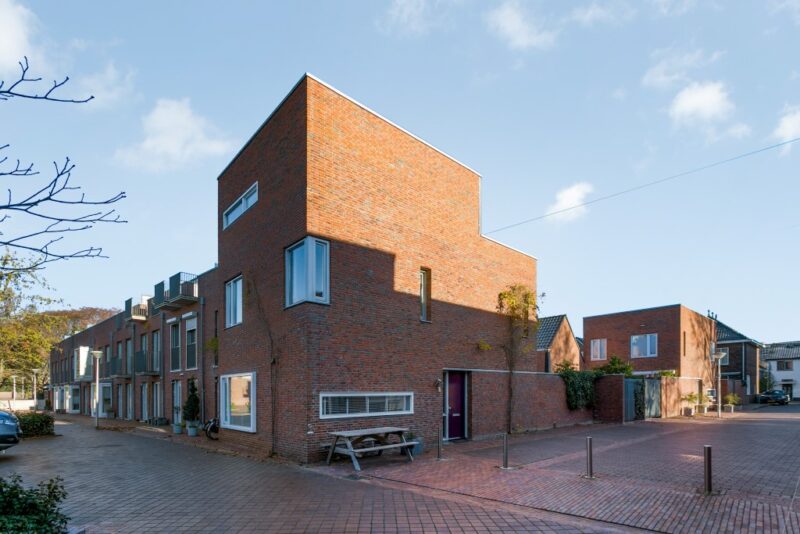
Interior shots of your home
Making the necessary preparations is the first step in getting your home ready for a viewing. Start by giving it a good clean. Make sure all rooms are spic and span, particularly the bathroom, the toilet, and the kitchen! Tidying up is another important step in preparing your home for the photo shoot. Put away dish cloths, washing up brushes, and cleaning products and make sure laundry and clothes aren’t left lying around. Store TV remotes and audio equipment and make sure personal items, such as photos and toiletries, aren’t visible in the photo. For furnished rentals, it helps when the beds are nicely made up. Light is another crucial element in making your home look good in photos. Open the doors to rooms and bedrooms, turn on the lights, and open the curtains. The fresher and cleaner your home looks in photos, the better your chances of getting a viewing.
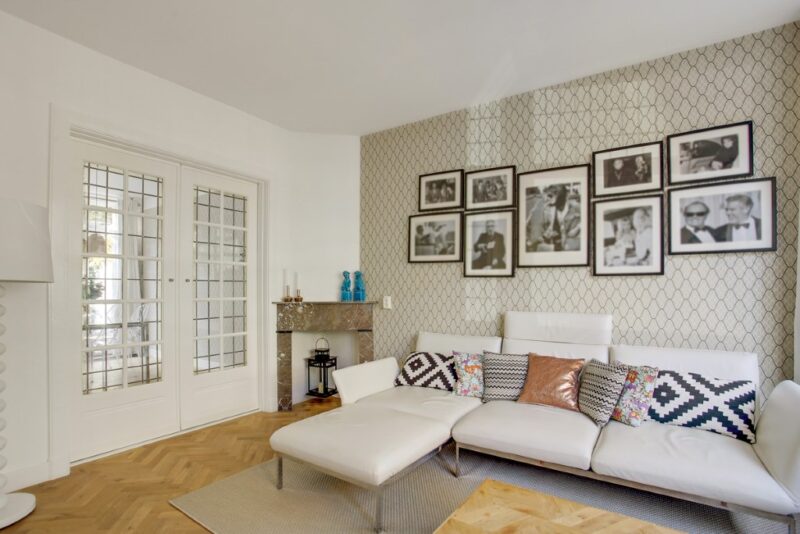
Professional photo shoot
To really make your home look its best, we recommend hiring a professional photographer. Professionals know the ins and outs of photographing homes and work with specialised equipment. Using backlights and other techniques, they can make even the darkest and smallest rooms camera-ready. We work with a professional real estate photographer who takes incredible photos of homes. The rooms are beautifully lit and expertly edited and detailed photographs are taken of the unique features in your home. If you’re looking to increase viewings, speed up the rental process, and reduce vacancy time, contact us and we’ll put you in touch with our photographer.
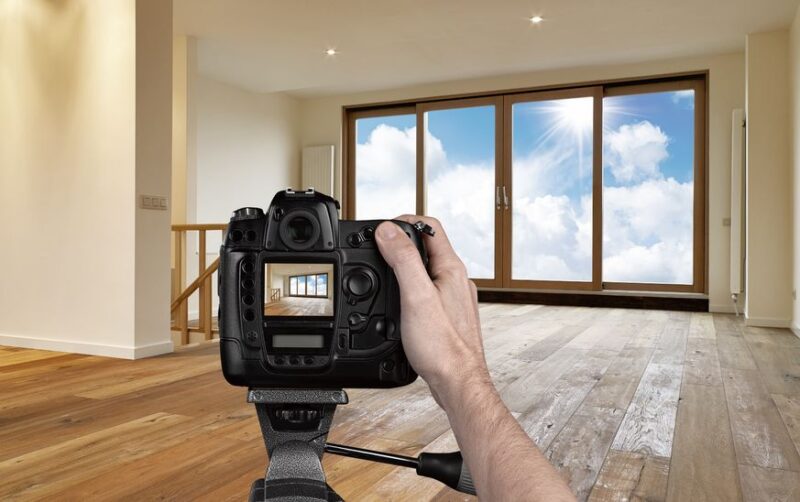
How do I quickly rent out my property?
Renting out your property can be extremely advantageous from a financial perspective. You will receive a monthly rental income and can charge municipal taxes and levies to the tenant if the property is furnished. Other advantages include social control and a property that is heated and kept clean. Renting out your home is a smart move if you plan on living abroad for an extended period of time.
When a property is vacant for too long, it can put a serious strain on your finances. That’s why it’s important to make your property as attractive as possible with an eye towards preventing long-term vacancy. Keep reading to find out how.
1. Hire a professional photographer
A picture is worth a thousand words, especially in the rental sector. The quality of the photos is also important. Stoit Groep works with a company that takes a series of photographs of your property. All rooms are photographed in the most flattering way possible. The company can also create floorplans to give potential tenants a better idea of the layout. We’ve noticed that tenants are much more likely to request a viewing if the property is neat and well-presented.
Make sure to focus on the details during your photo shoot. Your property should be clean, bright, and nicely decorated. A professional photo shoot will significantly increase the chances of your property being viewed and rented out!
2. Modern conveniences
Another tip to help you rent out your property more quickly is to make sure it is equipped with modern appliances and devices. A dishwasher, a freezer, a flat screen TV, and wireless internet are all par for the course when it comes to furnished houses these days. Modern appliances like these are particularly high on the list of priorities for expats! Make sure the appliances work and that they come with the necessary manuals.
3. Clean and hygienic
The cleanliness of a property is one of the first things people notice during a viewing – and first impressions tend to last the longest. Make sure the paintwork is tidy, fill any holes or damage to the walls, and make sure the property smells clean and fresh. Many expats tend to prefer properties that are uncarpeted. As an added benefit, laminate, composite, and tiled floors are easier to maintain and more wear-resistant. Clean and tidy properties tend to get rented out more quickly.
4. Keep the furnishings neutral but warm
To maximise the chance of renting out your property, make sure it appeals to as wide an audience as possible. This means keeping the furnishings neutral and staying away from bold colours or styles. You should, however, add some decor elements to give your property the necessary warmth. In the end, the tenant will decorate their new home to their own tastes during the rental period.
5. Be flexible
The fewer conditions you set, the more accessible your property will be to potential tenants. A property with fewer conditions is more likely to be rented out. Unless it is strictly necessary, we do not recommend including a vacancy clause or an eviction clause in your rental terms. Try to see things from the tenant’s perspective and keep the number of rules to a minimum.
6. Include a property folder
Presenting your potential tenants with a clear and detailed property folder shows them that you are highly organised and assures them that everything has been properly documented. It also gives tenants a useful package of information to consult if they have questions.
7. Give your realtor the keys and the alarm code
To rent out your property as quickly as possible, make sure the realtor has everything he or she needs for the viewing and the ultimate delivery. Expats tend to prefer properties that can be viewed and moved into within a relatively short timeframe. To prevent any unnecessary delays, make sure the realtor has the keys to the property, the alarm code, the waste disposal pass, and the remote to the car park, if applicable.
If you would like more information about successfully renting out your property and using our extensive services, feel free to contact us!